Manaslu Circuit Trek – Remote Himalayan Adventure
The Manaslu Circuit Trek is one of Nepal’s most rewarding off-the-beaten-path Himalayan adventures, combining spectacular mountain scenery, remote villages, rich Buddhist culture, and the challenge of crossing the Larkya La Pass (5,106 m / 16,752 ft). The journey circles Mount Manaslu (8,163 m / 26,781 ft), the world’s eighth-highest mountain, and dives deep into a remote Himalayan region where traditional culture remains central to daily life.
Compared with the more heavily visited trails in the Everest Base Camp and Annapurna regions, trekking the Manaslu Circuit offers a quieter and more remote experience. The trail follows the Budhi Gandaki River through lush forests, terraced hillsides, dramatic gorges, suspension bridges, and traditional Gurung villages before gradually entering the high Himalayan landscape.
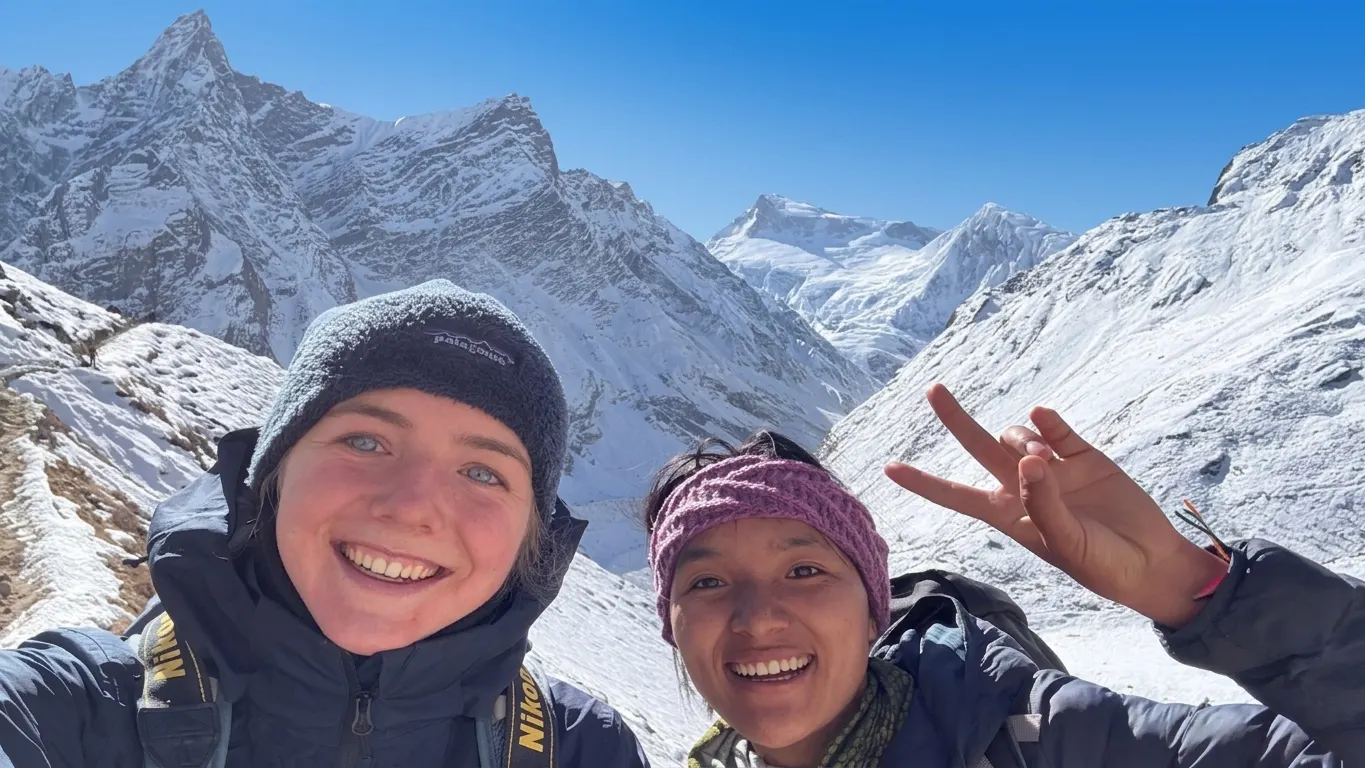
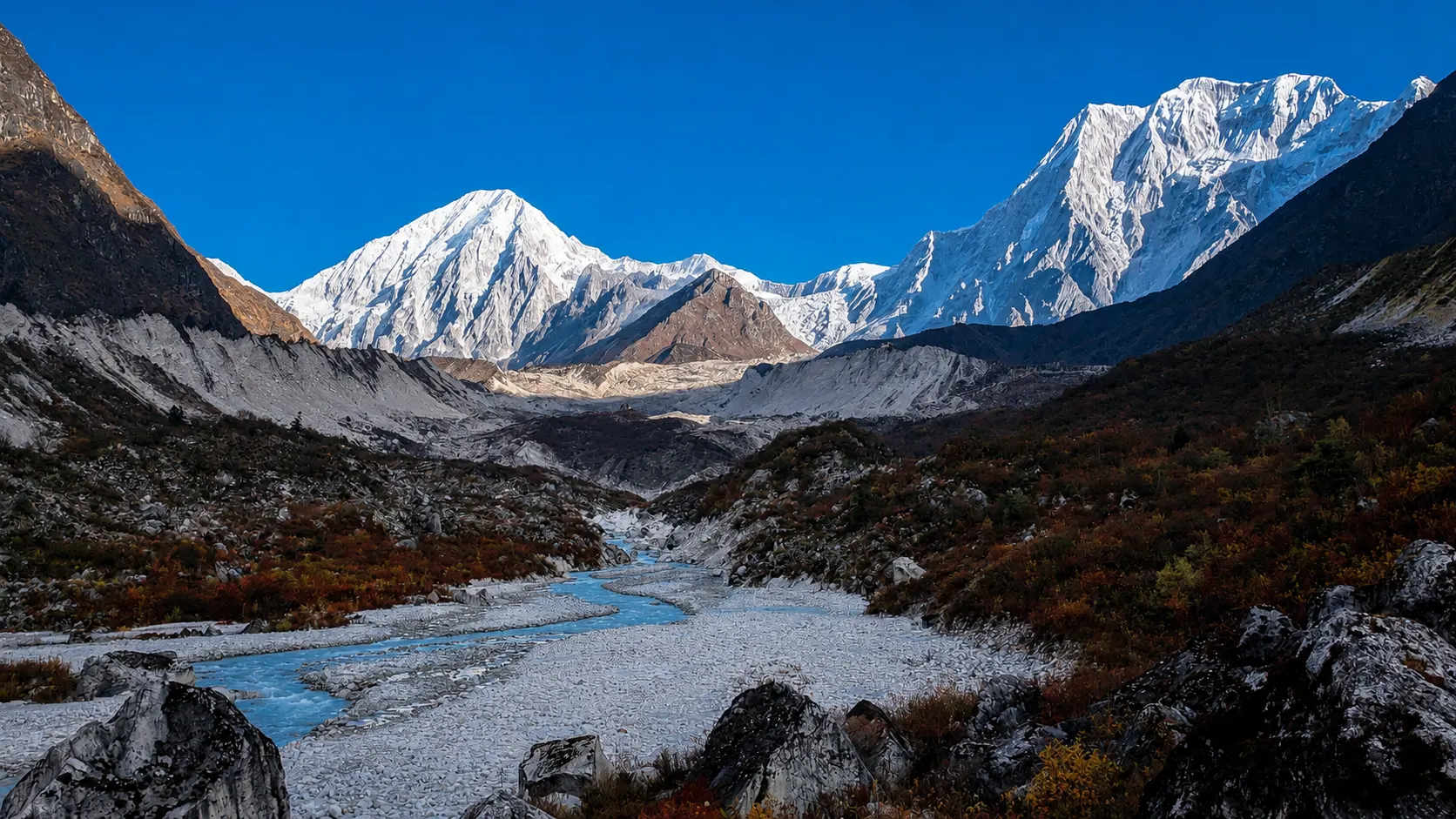
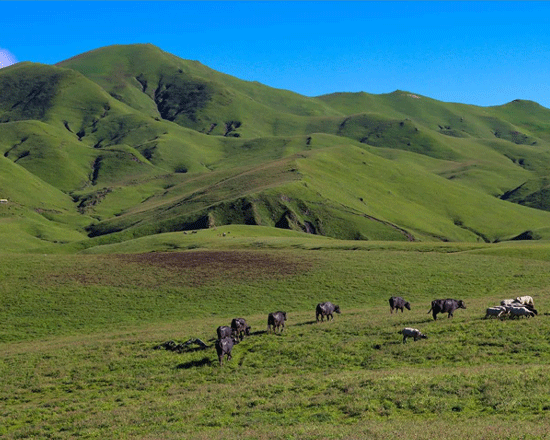
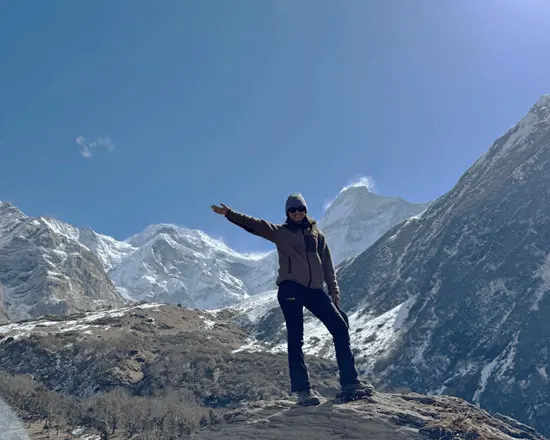
As you gain altitude, the scenery changes dramatically. Green subtropical valleys give way to alpine forests, open meadows, Tibetan-influenced villages, glacial valleys, and rugged mountain terrain. Throughout the journey, you enjoy impressive views of Mount Manaslu, Himalchuli, Ngadi Chuli, Shringi Himal, Ganesh Himal, and other surrounding peaks.
The 12-day Manaslu Circuit Trek
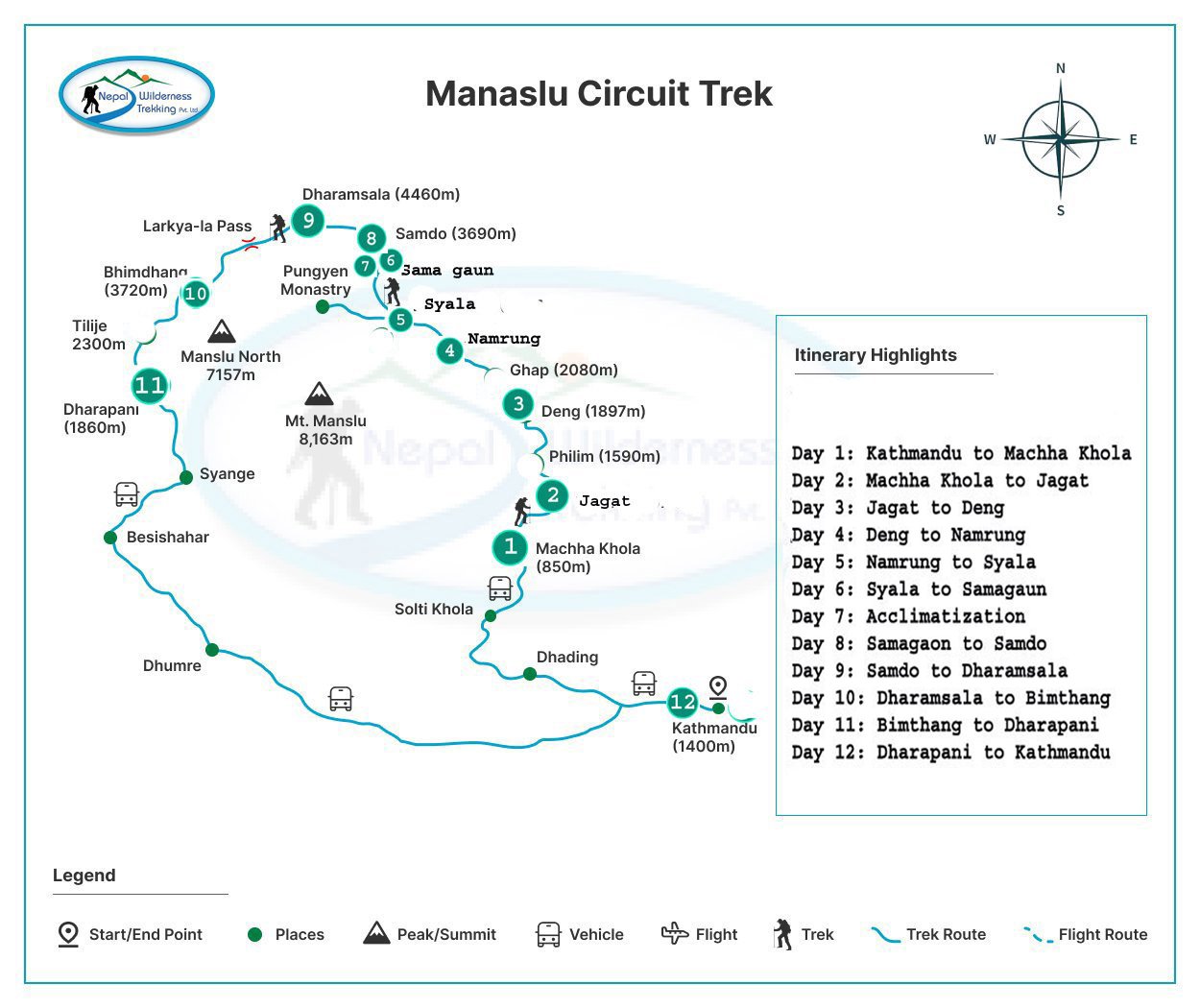
The 12-Day Manaslu Circuit Trek begins with an overland drive from Kathmandu into the Budhi Gandaki River Valley; the route steadily climbs through subtropical gorges, terraced farmlands, bamboo groves, and traditional Gurung villages. As you gain elevation, the landscape transitions into high alpine pine and rhododendron forests, entering the culturally rich Nubri Valley with its strong Tibetan Buddhist heritage, ancient monasteries, and Mani walls.
The middle section passes through high-altitude settlements like Syala, Samagaun, and Samdo. Samagaun serves as the primary acclimatization hub, allowing for side trips to glacial Birendra Lake and Manaslu Base Camp (4,800m). The climax of the trek is crossing the challenging Larkya La Pass (5,106m), which offers 360-degree mountain panoramas of Himlung Himal, Cheo Himal, Peak 29, and Annapurna II, before descending through the alpine meadows of Bimthang to Tilche for the return drive back to Kathmandu.
Crossing Larkya La Pass – The Trek’s Greatest Challenge
The 3:30 AM Pre-Dawn Call
The journey over Larkya La Pass begins in the quiet, frozen darkness of High Camp at Dharamsala (4,460m). At 3:30 AM, the alarm breaks the silence. The mountain air outside is intensely crisp and sub-zero, but inside the dining hall, a warm, high-carbohydrate breakfast—hot porridge, pancakes, eggs, and steaming mugs of black tea or coffee—provides the essential fuel needed for the grueling ascent ahead. Zipping up windproof layers, adjusting headlamps, and stepping out under a vast canopy of glittering high-altitude stars sets an unforgettable, adventurous tone for the day.
The Glacial Climb & Glacial Lakes
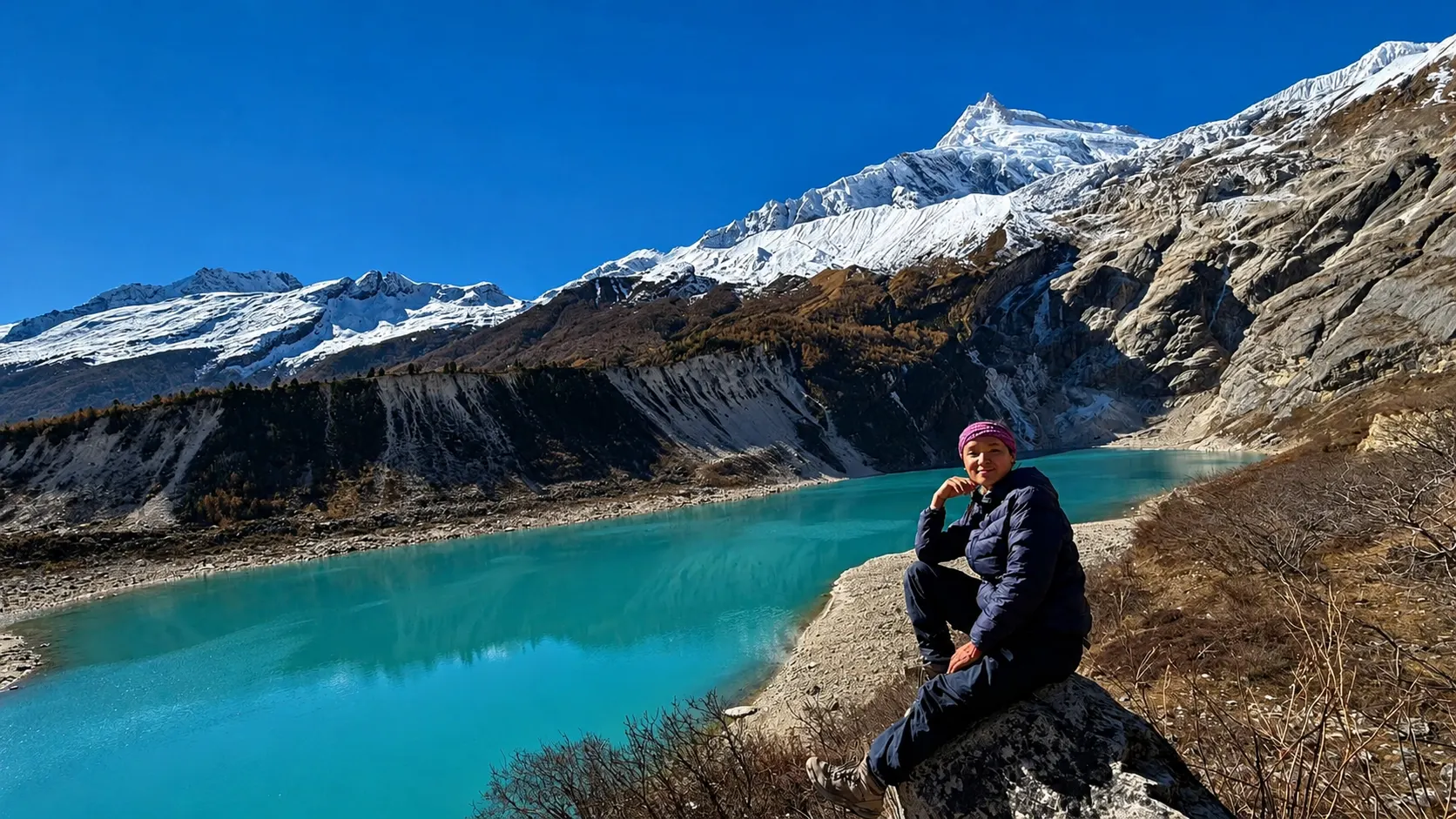
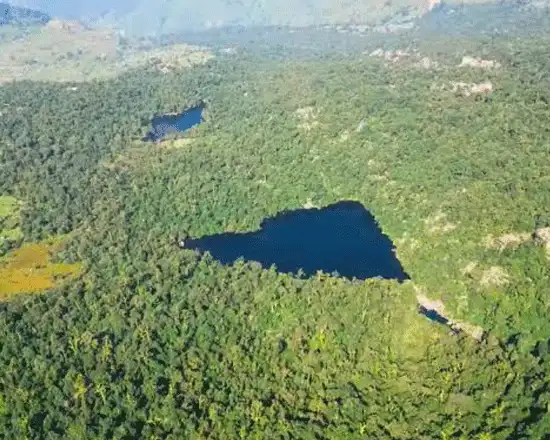
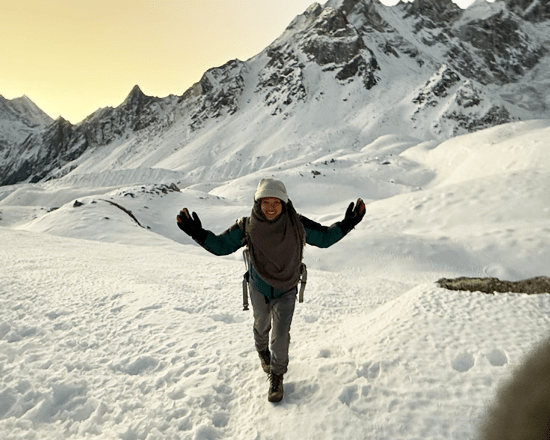
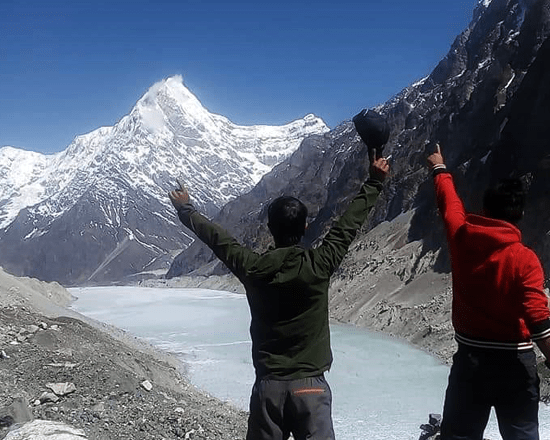
Beginning the trek by headlamp light, you follow a steady, crunching trail along the lateral moraine of the Larkya Glacier. As the first faint light of dawn glimmers across the horizon, the dark silhouettes of snow-capped giants begin to glow. Before reaching the upper slopes, the trail unveils breathtaking views of pristine high-alpine glacial lakes nestled below the moraine. The still, deep-turquoise and icy waters of these alpine tarns perfectly reflect the surrounding glaciers and early morning pink light, offering one of the most serene visual highlights of the entire trek.
High-Altitude Tea Break Before the Final Push
As the trail steepens across icy scree and rolling glacial hummocks, the altitude makes every breath intentional. Just before the final, steep climb to the crest, trekkers stop at a rustic mountain shelter for a welcome tea break. Sipping hot ginger-lemon tea in the freezing air brings instant warmth to cold fingers and a vital burst of energy, allowing you to catch your breath, soak in the sheer scale of the landscape, and rally strength for the last push to the pass.
Why Choose the Manaslu Trek?
1. Remote & Unspoiled Wilderness
The route passes through protected ecosystems within the Manaslu Conservation Area (MCAP), taking you through terraced farmlands, pine forests, and isolated mountain settlements.
2. Panoramic Himalayan Mountain Views
Throughout the journey, you will enjoy views of major peaks:
3. The Larkya La Pass Challenge
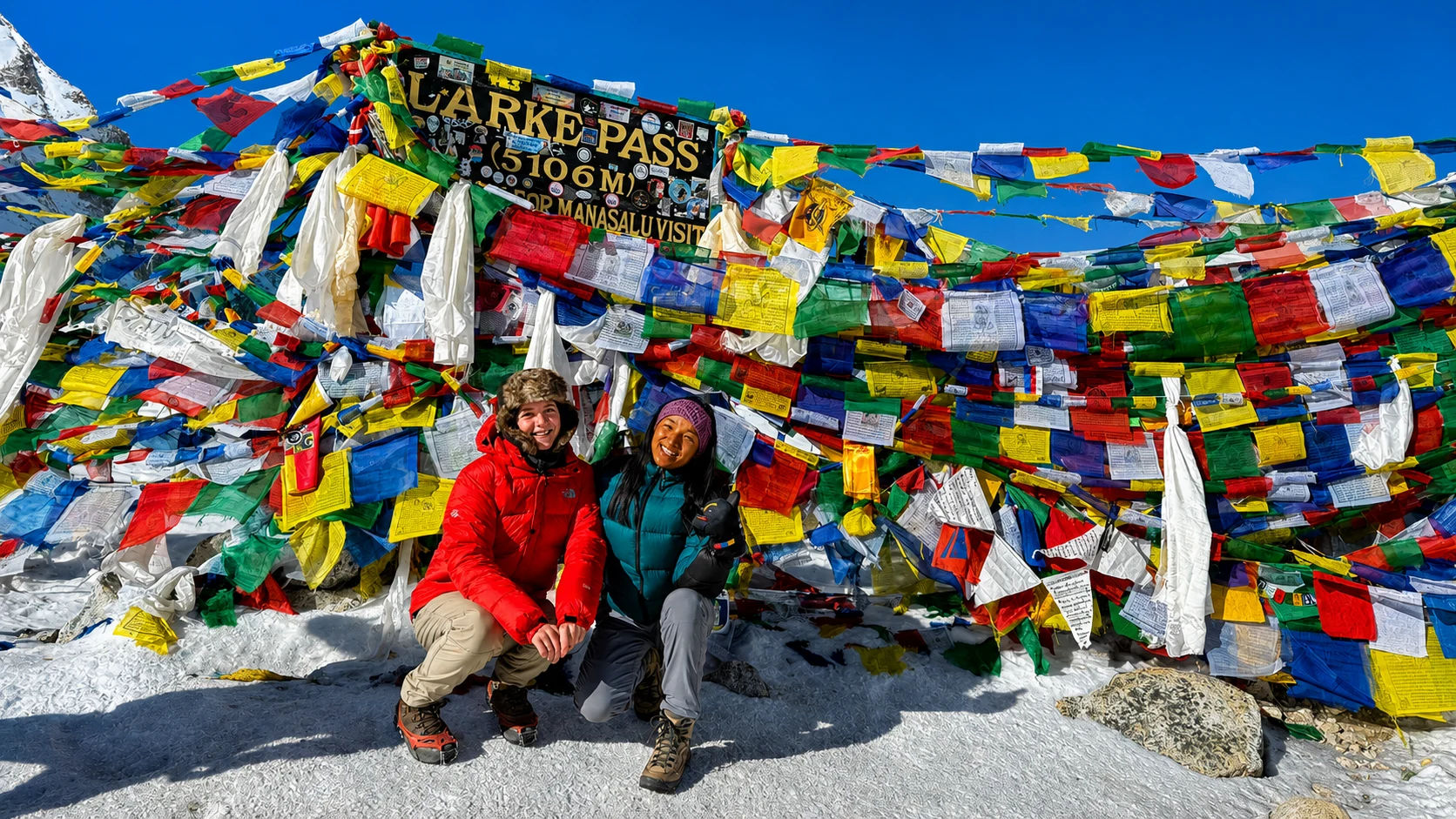
Crossing the final snow ridge brings you to the summit of Larkya La Pass (5,106m / 16,752ft), marked by vibrant rows of Buddhist prayer flags fluttering against the high mountain wind.
Standing at the top offers a dramatic 360-degree panorama featuring Mt. Manaslu, Himlung Himal, Cheo Himal, Kang Guru, and the massive wall of Annapurna II. Crucially, the summit is an extraordinary geographical milestone: it forms the precise natural border between the Manaslu Conservation Area (Gorkha District) and the Annapurna Region (Manang District). Standing on this high Himalayan ridge marks both the physical high point of your journey and your official transition from the remote, Tibetan-influenced valleys of Manaslu down into the alpine basins of the Annapurna circuit.
Flora and Fauna of the Manaslu Region
The Manaslu region is protected by the Manaslu Conservation Area Project (MCAP) and contains a remarkable range of ecosystems. Because the trekking route rises from relatively warm river valleys to high alpine terrain, vegetation and wildlife change significantly with altitude.
Wildlife
The Manaslu region supports a variety of Himalayan wildlife. Sightings are never guaranteed, but the protected landscape provides habitat for species including:
- Snow leopard
- Himalayan blue sheep (bharal)
- Himalayan thar
- Musk deer
- Himalayan marmot
- Himalayan black bear
- Langur
- Various smaller mammals
Red pandas are also recorded in the wider Manaslu conservation region, although sightings are rare.
Birds of the Manaslu Region
Birdlife changes with elevation and habitat. Possible sightings include:
- Himalayan monal
- Blood pheasant
- Kalij pheasant
- Snow partridge
- Himalayan griffon
- Eagles and other raptors
- Mountain songbirds
For nature lovers and photographers, the changing ecosystem adds another dimension to the trekking experience.
Responsible Trekking
The Manaslu Conservation Area protects both biodiversity and traditional communities. Nepal Wilderness Trekking encourages responsible travel by asking trekkers to:
- Respect local culture and religious sites
- Avoid unnecessary plastic waste
- Carry rubbish to designated disposal points
- Respect wildlife and natural habitats
- Use local accommodation and services
- Support local communities
The combination of mountains, forests, wildlife, and traditional communities makes the Manaslu region much more than a mountain-view trekking destination.
People, Culture and Traditions of the Manaslu Region
The Manaslu Himalayan trek is as much a cultural journey as it is a mountain adventure. The region is home to diverse Himalayan communities, with Gurung communities particularly prominent in the lower sections and Tibetan-influenced communities of the Nubri Valley in the upper Manaslu region. Traditional architecture, Buddhist practices, agriculture, livestock herding, festivals, and local hospitality remain important parts of life.
Gurung Communities
The lower sections of the route pass through villages influenced by Gurung culture.
Visitors can experience:
- Traditional stone-built houses
- Mountain farming
- Local food
- Traditional customs
- Tea-house hospitality
- Gurung cultural traditions
Nubri Valley Communities
The upper villages, including Namrung, Lho, Samagaun, and Samdo, have strong Tibetan cultural influences. Traditional life is closely connected with:
- Buddhism
- Yak herding
- Mountain agriculture
- Livestock
- Local trade
- Seasonal migration
The architecture and religious traditions of the upper valley are particularly distinctive.
Tibetan Buddhist Heritage
Prayer flags fluttering above mountain villages, Mani walls lining the trail, chortens beside paths, and prayer wheels outside homes and monasteries are common sights throughout the upper Manaslu region. These features reflect a deeply rooted Buddhist culture that has developed over generations.
Pungyen Gompa
Pungyen Gompa, located near Samagaun, is one of the important spiritual sites in the region. Its location offers impressive views of Mount Manaslu and the surrounding mountains. Trekkers visiting the area can gain a deeper appreciation of the spiritual traditions that shape life in the upper valley.
Traditional Mountain Lifestyle
Local livelihoods traditionally depend on:
- Agriculture
- Yak and livestock farming
- Local trade
- Tourism and tea houses
Life at high altitude is demanding, and local communities have developed practices that allow them to adapt to the challenging Himalayan environment.
Festivals
Buddhist festivals and local celebrations remain an important part of community life. Depending on the season, visitors may encounter:
- Lhosar celebrations
- Buddhist ceremonies
- Local village festivals
- Religious prayers and gatherings
These events provide a fascinating insight into the relationship between religion, community, and mountain life.
Himalayan Hospitality
One of the most memorable aspects of the trek is meeting local families and staying in traditional mountain lodges. The combination of simple accommodation, local food, warm hospitality, and spectacular surroundings creates a genuine Himalayan experience.
Manaslu Circuit Trek Difficulty
The Manaslu Circuit Trek 12 Days is a moderate to challenging high-altitude trek. The main factors that make the Manaslu Circuit Trek challenging are;
1. High Altitude
The highest point is Larkya La Pass at 5,106 m. As altitude increases, the air contains less available oxygen, making physical activity more demanding. The itinerary includes an acclimatization day around Samagaun before moving toward the higher elevations.
2. Long Walking Days
Most days involve approximately 4–7 hours of walking, while the Larkya La crossing can take around 8–10 hours, depending on weather, trail conditions, pace, and group fitness. The trail includes steep climbs, descents, rocky paths, uneven terrain, and sections of exposed mountain trail.
3. Remote Mountain Conditions
Compared with the Everest and Annapurna regions, some sections of Manaslu have fewer facilities. Accommodation becomes increasingly basic at higher elevations, and trekkers should be prepared for a more rustic mountain experience. That remoteness is also one of the main reasons people choose the Manaslu Circuit.
4. Mountain Weather
Weather can change rapidly at high elevations. Snow, strong winds, freezing temperatures, and icy trails can occur around Larkya La, particularly outside the main trekking seasons. Good equipment and a flexible itinerary are therefore important.
Technical climbing skills are not required, but trekkers should be physically fit and prepared for several demanding days.
Fitness Requirements
You do not need mountaineering experience to complete the Manaslu Circuit Trek, but good physical fitness is important.
The trek is suitable for people who:
- Exercise regularly
- Enjoy long-distance walking
- Can walk for several hours a day
- Are comfortable walking uphill and downhill
- Have some previous hiking or trekking experience
Preparing with regular walking, hiking, cardio training, and leg-strength exercises for several weeks before arrival can make the trek considerably more comfortable.
Tips for Completing the Manaslu Circuit Trek
- Train regularly before arriving in Nepal.
- Build up your endurance with long walks and hikes.
- Maintain a comfortable and consistent pace.
- Stay well hydrated.
- Allow enough time for acclimatization.
- Carry suitable layers and warm clothing.
- Use good-quality trekking shoes.
- Follow your guide’s advice regarding altitude and weather.
- Avoid rushing the Larkya La crossing.
- Keep your itinerary flexible in case of unsupportive mountain weather.
Best Time to Visit the 12-day Manaslu Circuit Trek
The best seasons for the Manaslu Circuit Trek are spring (March–May) and autumn (September–November). During these periods, the weather is generally more stable, mountain visibility is better, and conditions are more favorable for crossing Larkya La.
Autumn – September to November
Autumn is generally considered the best overall season. After the monsoon, the atmosphere becomes clearer and the mountains are often highly visible.
Advantages
- Clear Himalayan views
- Generally stable weather
- Comfortable daytime temperatures
- Good conditions for Larkya La
- Excellent photography opportunities
October and November are usually the most popular months.
September can still experience some residual monsoon weather, particularly in the lower valleys.
Spring – March to June
Spring is another excellent season.
Rhododendrons bloom in the lower and middle elevations, adding color to the landscape.
Advantages
- Rhododendron forests in bloom
- Pleasant temperatures
- Good mountain visibility
- Fresh greenery
- Generally favorable trekking conditions
April and May are particularly attractive for combining mountain scenery with spring flowers.
Winter – December to February
Winter trekking is possible but considerably more demanding.
Higher sections around Dharamsala and Larkya La can experience heavy snow and freezing temperatures.
Winter conditions may include:
- Very cold nights
- Snow around the pass
- Icy trails
- Fewer trekkers
- A peaceful mountain environment
Winter trek is for experienced trekkers with appropriate equipment and flexible schedules.
Monsoon – June to August
The monsoon is generally less suitable for the classic Manaslu Circuit because lower sections can receive heavy rainfall.
Possible challenges include:
- Wet and slippery trails
- Landslides
- Muddy paths
- Reduced visibility
- Transportation delays
- Leeches in lower forest areas
Which Month Is Best?
For most trekkers, October, November, April, and May provide the best combination of weather, visibility, comfortable temperatures, and trekking conditions.
Manaslu Circuit Trek Permits & Regulations
Because the region borders Tibet, independent solo trekking is strictly prohibited. Trekkers must hire a licensed guide through a registered agency like Nepal Wilderness Trekking and carry three mandatory permits:
-
Manaslu Restricted Area Permit (RAP)
-
Autumn Season (September to November): USD 100 for the first 7 days, and USD 15 per day thereafter.
-
Rest of the Year (December to August): USD 75 for the first 7 days, and USD 10 per day thereafter.
-
Manaslu Conservation Area Permit (MCAP) cost USD 30.
-
Annapurna Conservation Area Permit (ACAP) (Required for the descent through Dharapani) cost USD 30.
Documents Required
Trekkers generally need:
- Passport copy
- Valid Nepal visa
- Passport-size photographs
- Trekking itinerary
- Travel insurance information
- Emergency contact details
Requirements can change, so our team confirms the current documentation before the trek.
Accommodation and Food During the Manaslu Circuit Trek
The Nepal Wilderness Trekking uses local tea houses and mountain lodges along the route. The accommodation is generally simple but comfortable, and staying in local lodges gives trekkers an opportunity to experience Himalayan hospitality while supporting local communities.
Accommodation
Typical tea-house facilities include:
- Twin-sharing rooms
- Beds and mattresses
- Blankets
- Common dining rooms
- Hot meals and drinks
- Wifi and Charging facilities in many villages
Facilities become more basic as you approach higher elevations. At Dharamsala/Larkya Phedi, accommodation is particularly basic because of the high altitude and remote location.
Rooms and Bathrooms
Twin-sharing rooms are standard. Private rooms may be available in some villages but cannot always be guaranteed, particularly during busy seasons. Bathrooms are generally shared. Hot showers may be available at selected lodges for an additional charge.
Food During the Trek
Tea houses offer a mixture of Nepali, Tibetan-influenced, and familiar international dishes.
Nepali Food
- Dal bhat
- Vegetable curry
- Rice
- Chapati
- Pickles
- Seasonal vegetables
Tibetan and Himalayan Food
- Tibetan bread
- Thukpa
- Momo
- Local noodle dishes
- Yak cheese products
Other Common Options
- Pasta
- Noodles
- Soups
- Eggs
- Pancakes
- Pizza-style dishes
- Vegetarian meals
Vegetarian and Dietary Requirements
Vegetarian food is widely available along the route. If you have specific dietary requirements or allergies, inform Nepal Wilderness Trekking before departure so we can coordinate with the tea houses as much as possible.
Drinking Water
Water is available at tea houses and villages throughout the trek.
Trekkers can use:
- Bottled water
- Filtered water
- Water purification tablets
- Portable water filters
Using a reusable bottle and purification system is recommended to reduce plastic waste.
The Tea House Experience
Staying in local tea houses is an important part of the Manaslu Adventure Trek experience. The facilities may be simpler than those found on more developed trekking routes, but the local hospitality, food, mountain scenery, and opportunity to meet people from remote Himalayan communities make the experience particularly rewarding.
Manaslu Circuit Trek Cost
The cost of the 12-Day Manaslu Circuit Trek typically ranges from $950 to $900 USD per person, depending on your group size, season of travel, preferred transportation, and individual porter requirements. Because the Manaslu region is a government-protected restricted area,
- Group Size & Shared Logistics: Since guide and porter expenses are shared among group members, traveling with 2 or more trekkers reduces the per-person price compared to solo travelers requiring dedicated crew.
- Transportation Mode: Packages standardly include public bus and shared local jeep connections. Upgrading to a private 4WD jeep from Kathmandu to Machha Khola and Dharapani to Besisahar adds comfort and saves hours of travel time.
- The package includes 3 main meals daily (Breakfast, Lunch, Dinner) along with tea-house lodge accommodations across the entire 12-day route.
Custom & Private Manaslu Treks
Looking for a personalized Himalayan adventure? We organize fully customized Manaslu Circuit packages for solo travelers, couples, families, and private groups.
How You Can Customize Your Trip:
-
Choose your preferred departure date
-
Adjust trek length and daily walking hours
-
Upgrade to private 4WD ground transportation
-
Request additional porters or extra hotel nights
-
Add pre- and post-trek city arrangements
Pricing varies according to group size, itinerary length, and custom service selections.
Why Trek with Nepal Wilderness Trekking?
We believe the best Himalayan journeys combine careful planning with genuine local experience. Our Manaslu trekking service includes experienced local expert guides, permit arrangements, transportation coordination, accommodation, meals, and assistance throughout the trek.
We organize both private and group Manaslu Trek departures, allowing travelers to choose an itinerary that suits their schedule, budget, and trekking experience.
Our priority is to provide a safe, well-organized, and enjoyable journey while respecting the environment and communities of the Manaslu region.
The Manaslu Base Camp Trek is more than a walk around an 8,000-meter mountain. It is a journey through changing landscapes, remote Himalayan villages, ancient Buddhist traditions, and some of the most spectacular mountain scenery in Nepal. From the warm valleys of the Budhi Gandaki to the frozen heights of Larkya La and the alpine landscapes around Bimthang, every section of the route offers something different.
If you are looking for a remote and culturally rich Himalayan adventure, the Manaslu region trek is an exceptional choice. With spectacular mountain scenery, traditional villages, ancient Buddhist culture, and the thrilling crossing of Larkya La Pass, it offers an unforgettable journey through one of Nepal’s most beautiful and less-traveled regions.
Departure Note
At Nepal Wilderness Trekking, we organize private and group Manaslu Circuit departures with experienced local guides, carefully planned logistics, accommodation, permits, transportation, and trekking support. Whether you are traveling alone, as a couple, with friends, or as a small group, we can arrange the journey according to your schedule and preferences.